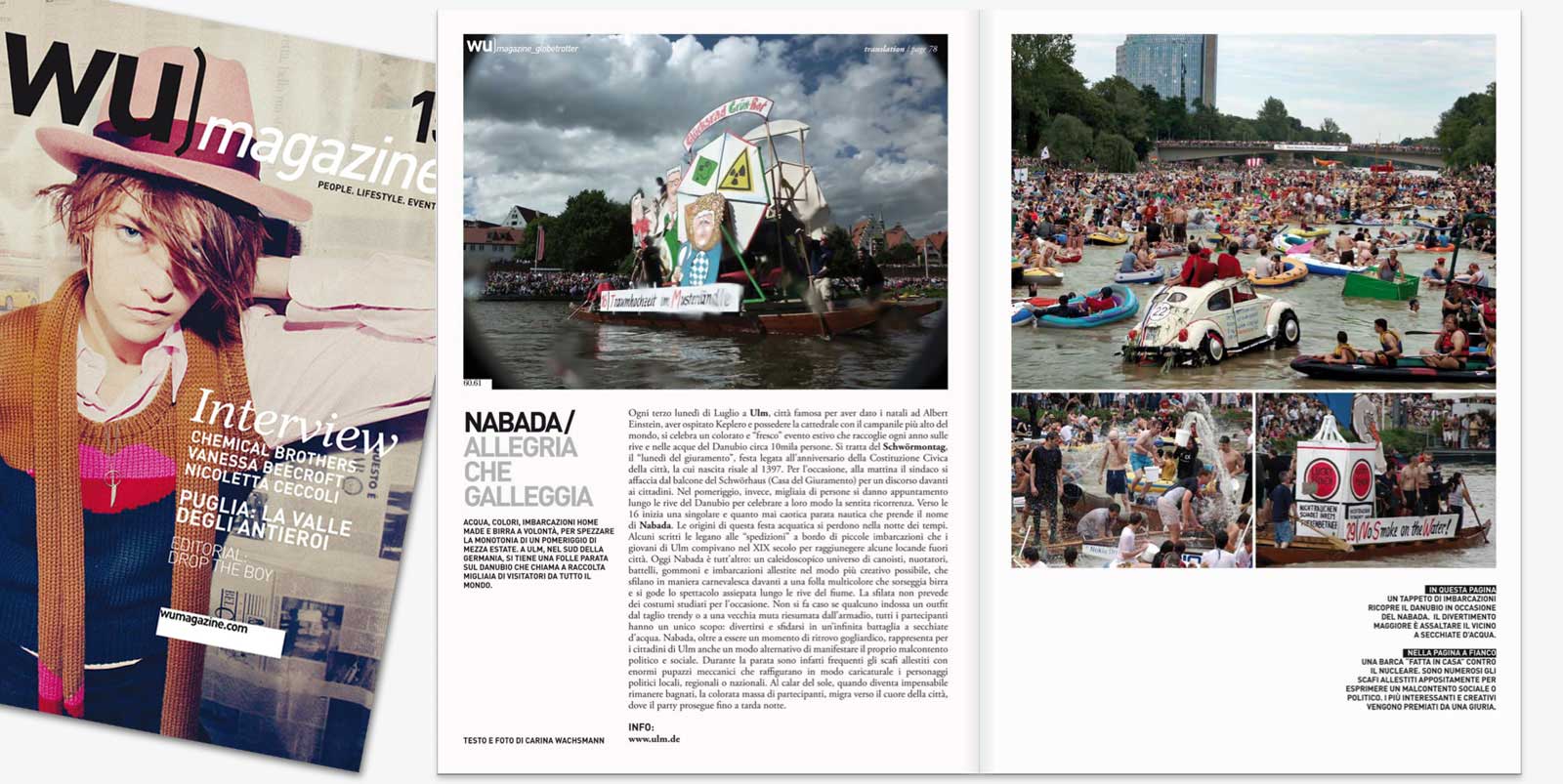
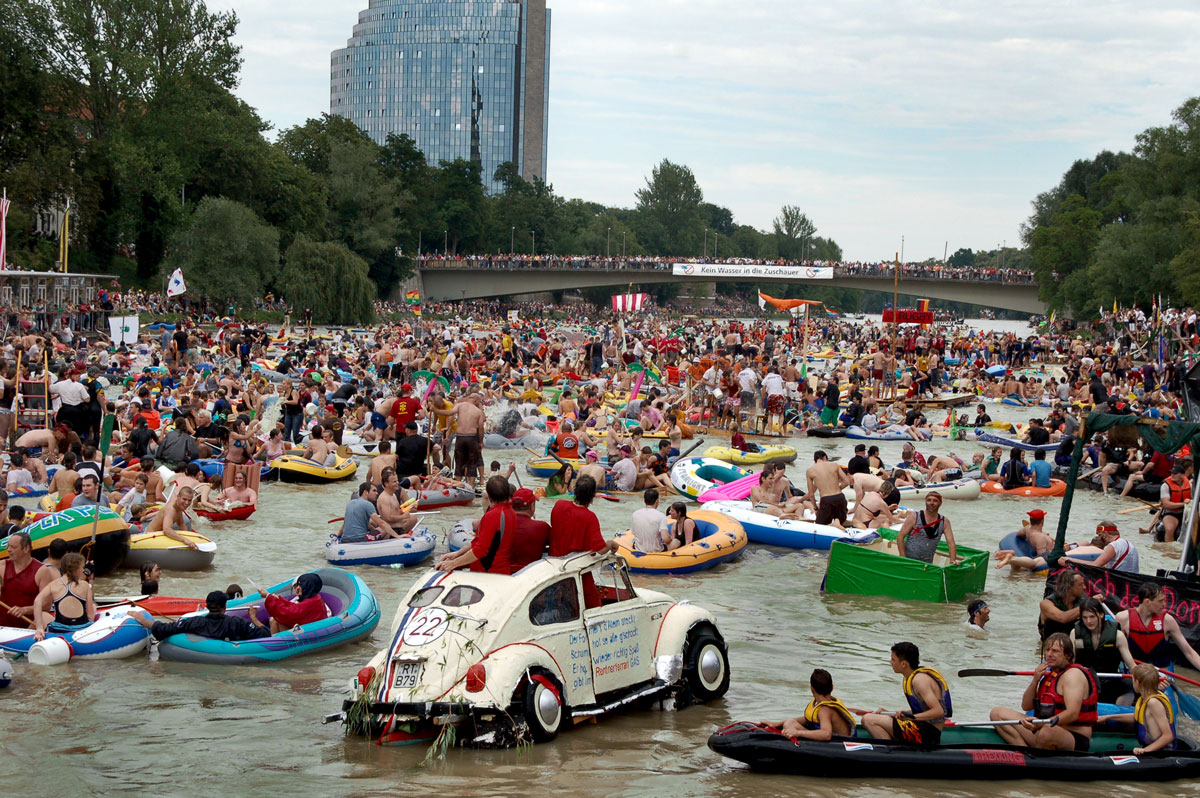
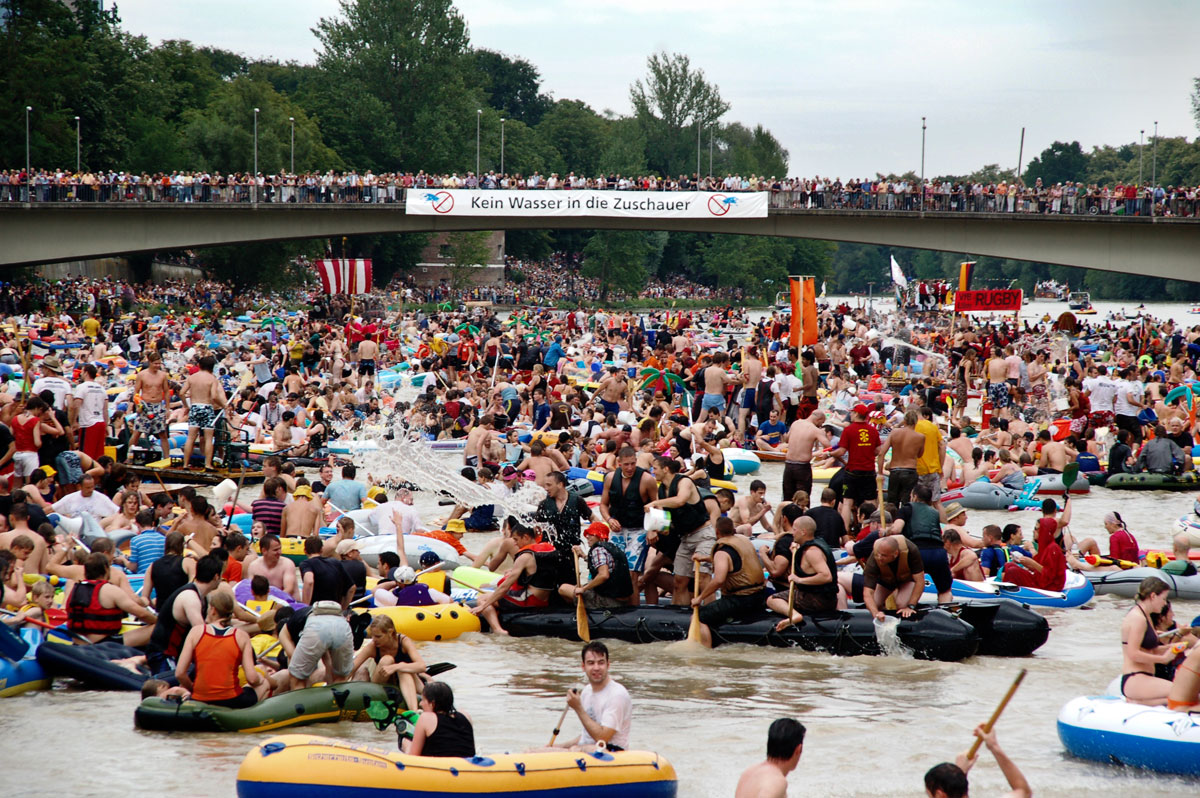
On the third Monday of July in Ulm, a town in the south of German, known for being the birthplace of Albert Einstein, Kepler and hosting the cathedral with the tallest church tower in the world, thousands of people celebrate a colorful and fresh summer event each year on the waters of the Danube. It’s the “Monday of the oath”, an event affiliated to the anniversary of the city’s constitution from 1397. After the traditional morning speech of the mayor, thousands of people meet at 4 pm to celebrate the fun part of this historical event, called “Nabada” (dialect, translated: swimming down).
Old books tell us that this day of celebration has different origins. In 1800 the young boys sailed with boats down the river to the taverns located outside the city. Other manuscripts describe a religious rite of young married couples who floated down the river and rocking the boot they felt into the water.
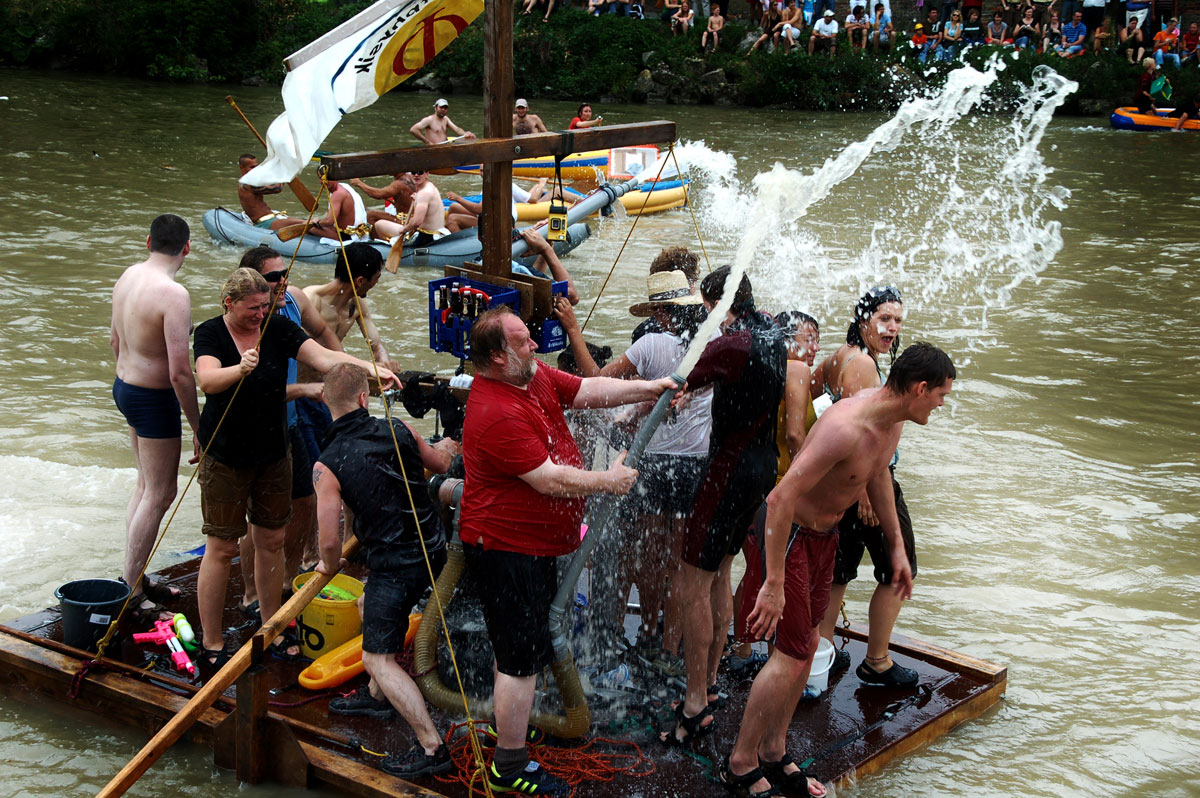
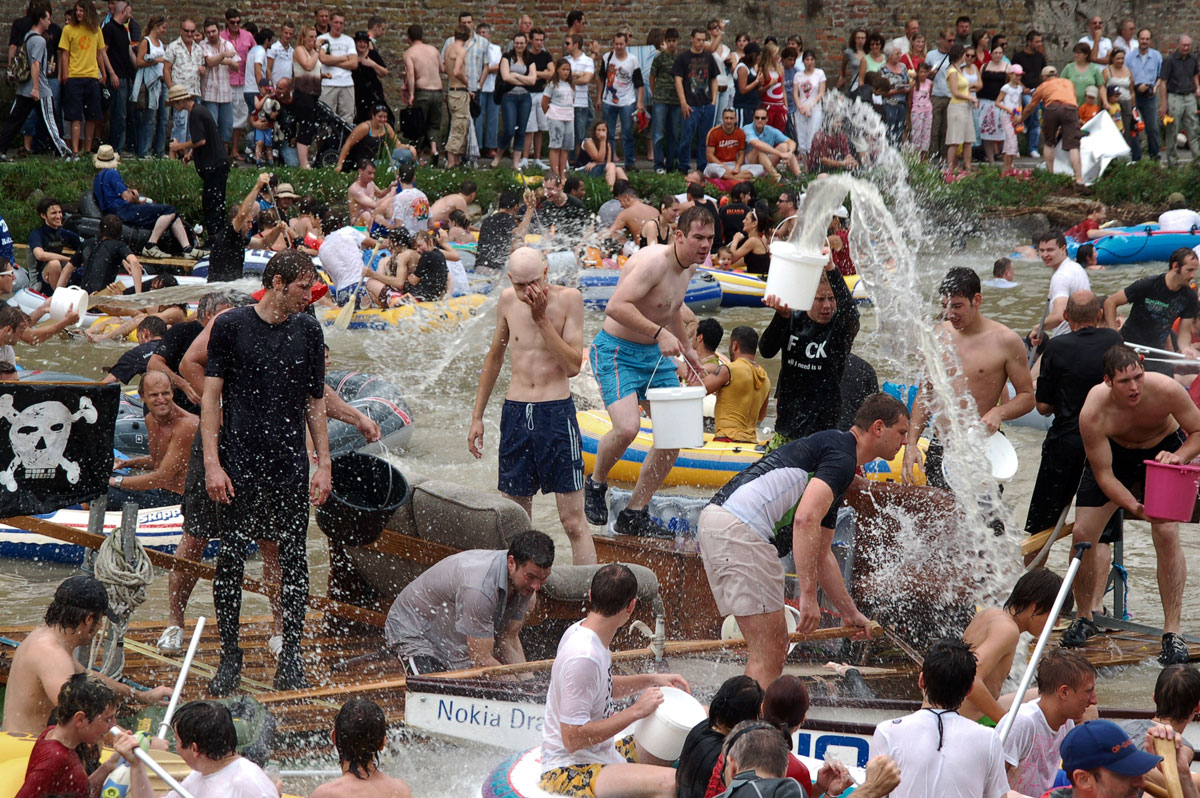
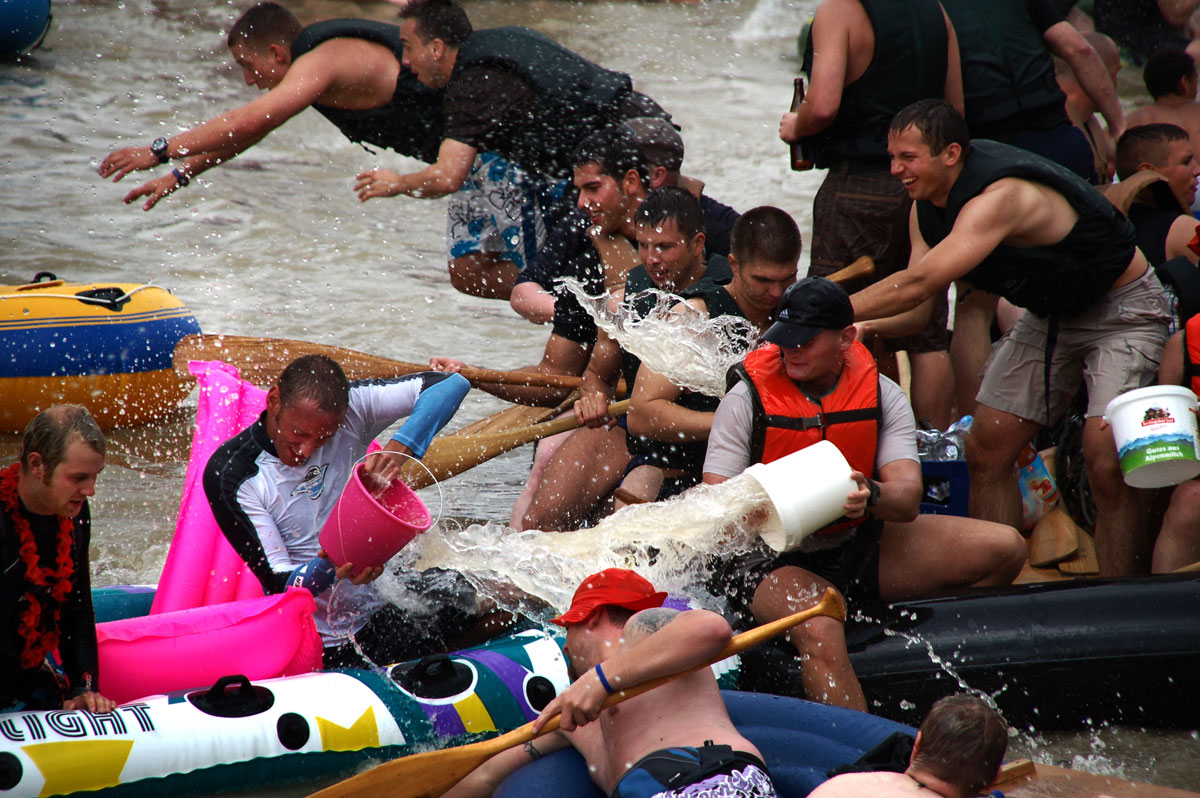
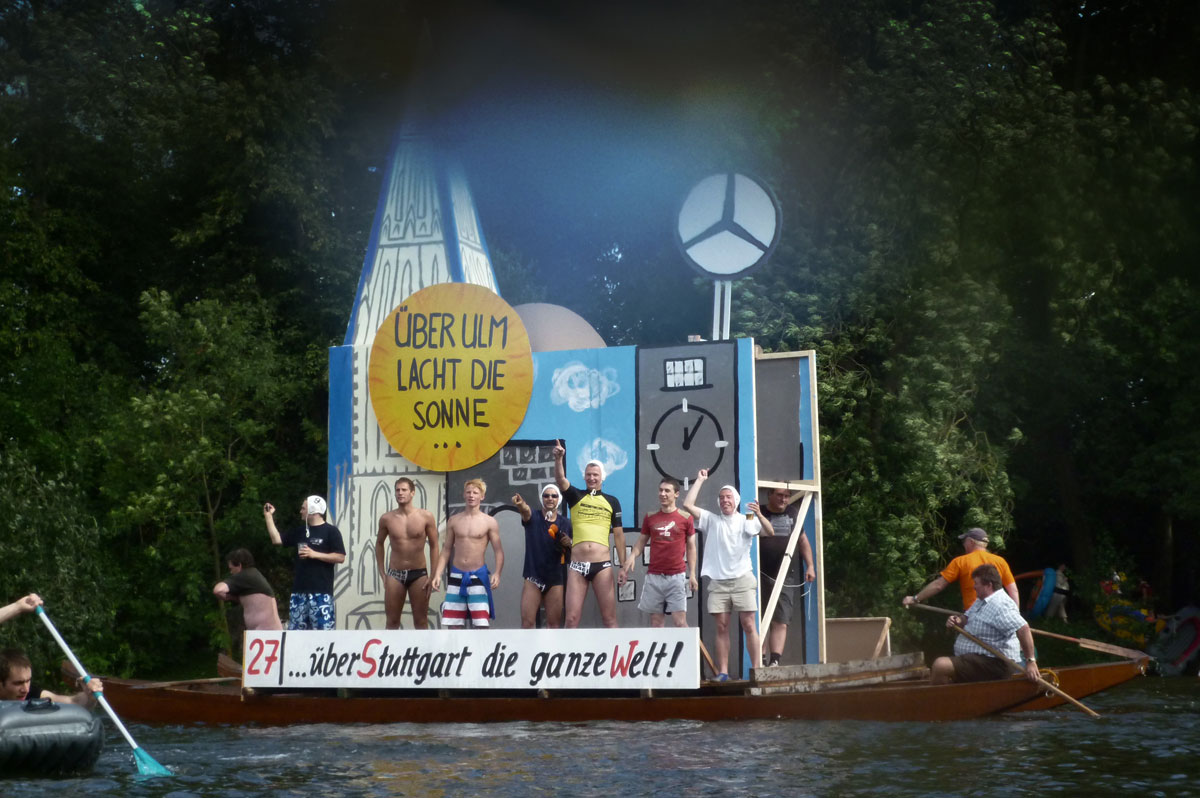
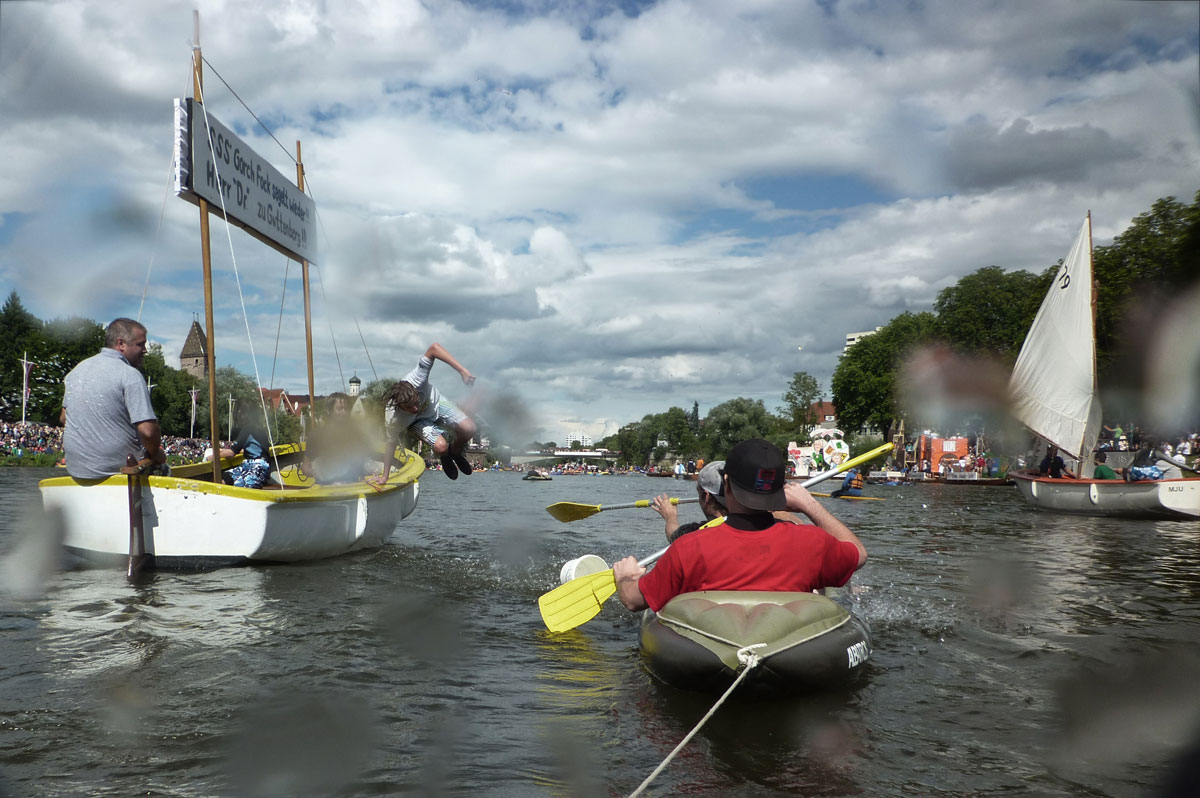
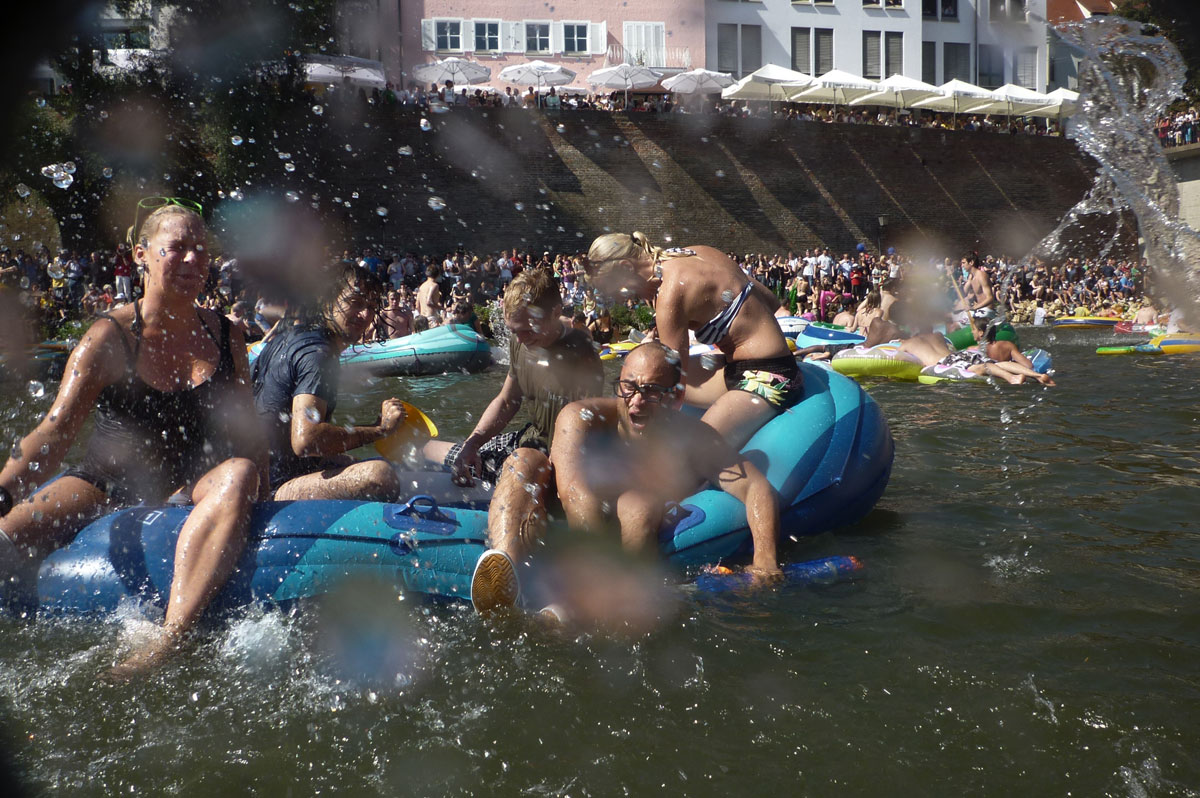
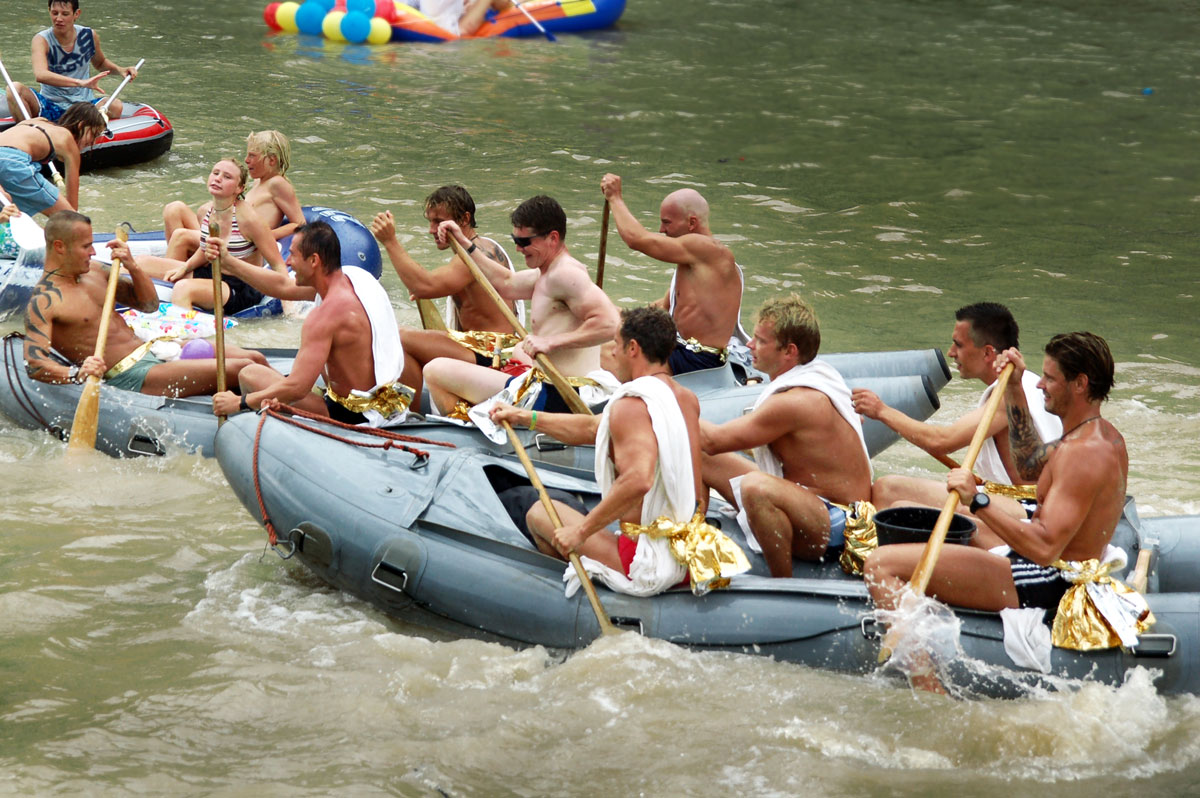
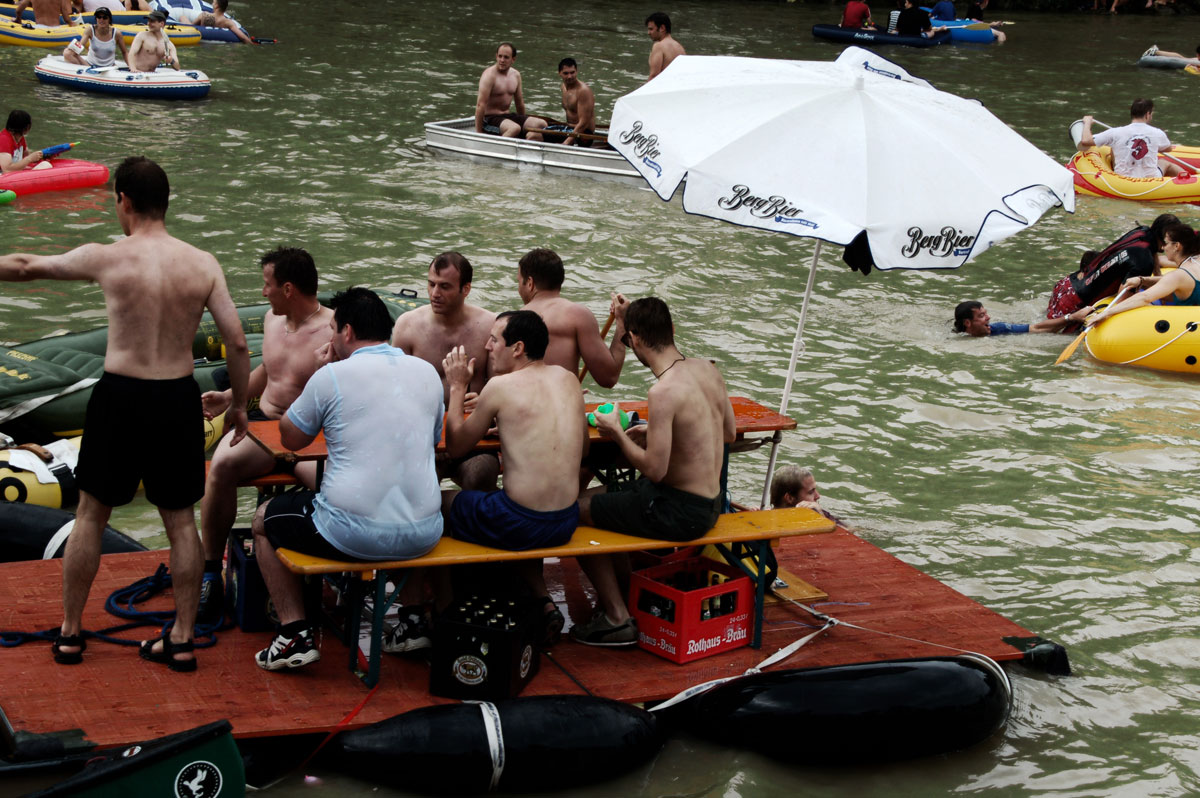
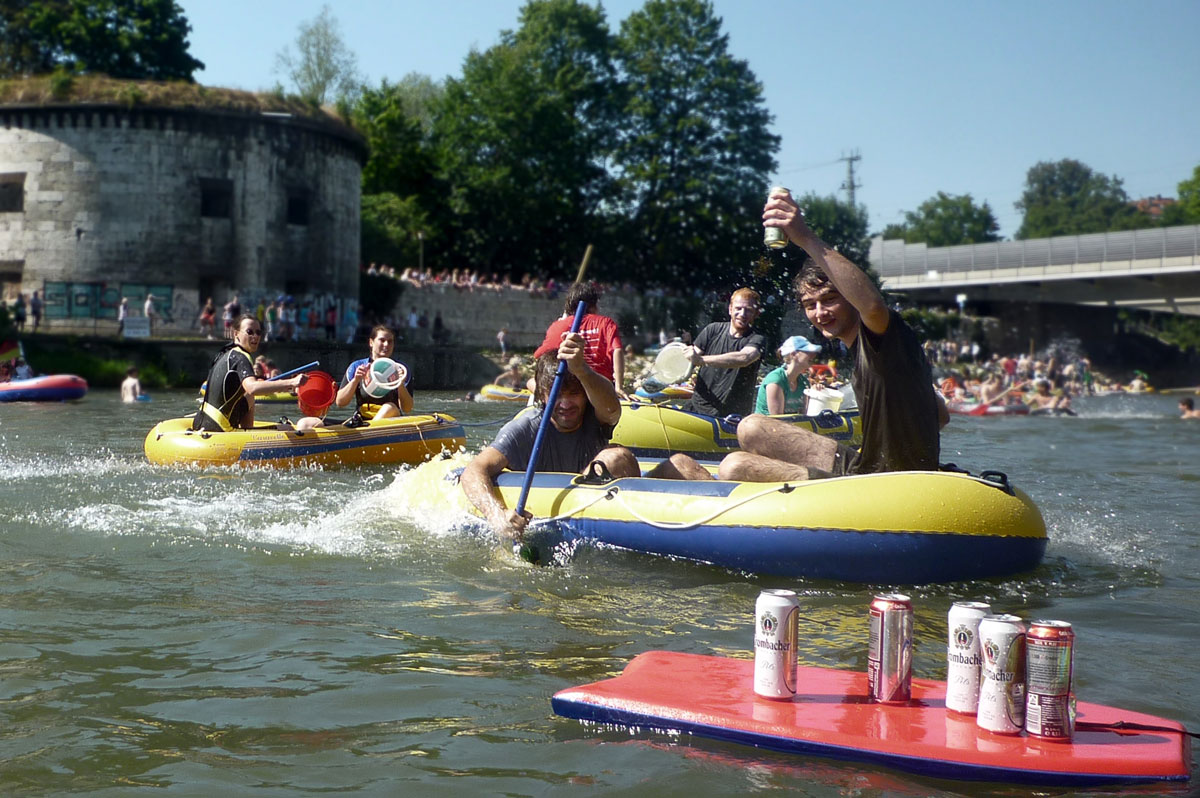
Today “Nabada” has become a cult for those who want to party and have fun with their friends. Inflatable rubber boots and car tires, hand-made rafts or other floating equipment. A carnival parade in front of the crowd sitting on the banks of the Danube river, sipping a cold beer and enjoying the show. No matter who cuts a fine figure in a bikini or who has clearly eaten to excess during the cold winter. All participants have the same purpose during “Nabada”: having fun and pulling buckets of water to your next.
But besides of being a source of entertainment, the parade is also an alternative way to visually demonstrate and express the citizens opinions about actual political, social or ecological issues. Giant hand-made figures with manual mechanisms showing local, regional or national characters mostly from politics who are taken sarcastically around. And the most creative and clever idea wins!
As the sun sets and finishes the parade, a colorful mass of people will head to the heart of the city, where dozens of events and concerts will entertain the people until late night.